Riku Mattila is a nuclear safety engineer by profession, not a physician or neuroscientist. His involvement with ALS began unwillingly, through his own diagnosis.
The first signs appeared in 2010 as a gradual loss of hand dexterity. Tasks that once required no thought became unreliable. Buttons, keyboards, tools, handwriting - all slowly deteriorated.
In 2012 came the diagnosis: Amyotrophic Lateral Sclerosis.
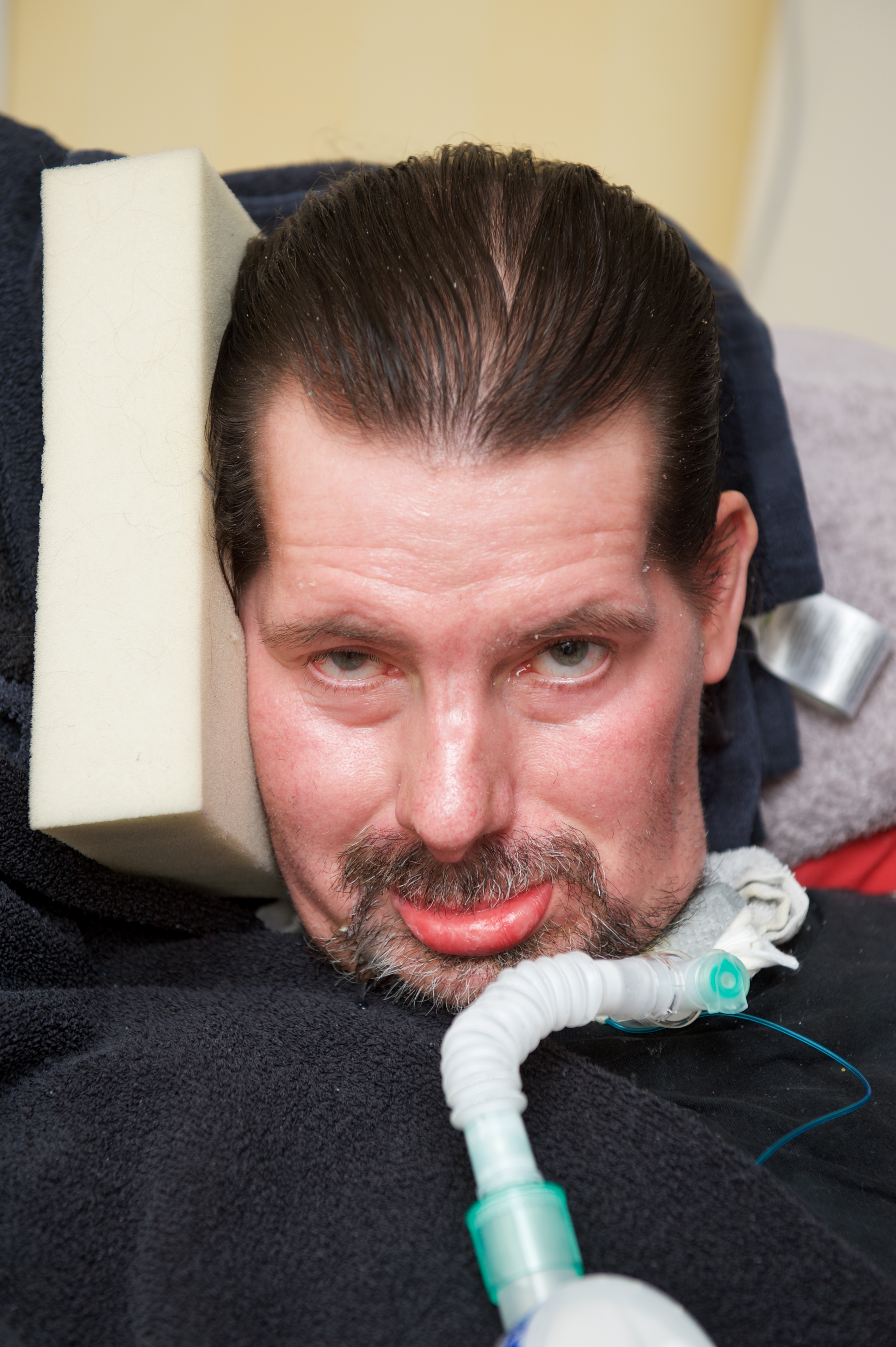
By 2013, the disease had progressed to quadriplegia, leaving him dependent on eye-gaze communication systems for writing and interaction with the outside world. The loss of movement did not end intellectual work, but it fundamentally changed the way it had to be done. Every sentence became slower. Every correction became deliberate.
In 2015, respiratory muscle weakness led to a major loss of lung function. Invasive mechanical ventilation became necessary in 2017.
Yet the disease did something unexpected.
Progression appears to have stopped in 2016 and has not resumed since.
The author does not present this as proof of a cure, nor as medical advice. But after years spent studying ALS from the perspective of someone living inside it, he became convinced that the disease is deeply connected to cellular energy balance - especially in the most energy-demanding cells in the human body: motor neurons.
This book was not written from the perspective of detached academic observation, but from inside the disease itself - from years spent watching symptoms evolve, reading research, comparing hypotheses, and trying to understand why motor neurons fail. The author approaches ALS as an engineer approaches a difficult system failure: by looking for constraints, energy flows, hidden dependencies, and mechanisms that connect seemingly separate observations into a coherent whole.
He does not claim to have definitive answers. But he argues that many forms of ALS may ultimately converge on a common problem: an increasingly impossible energy balance within motor neurons, eventually pushing them past the point of recovery.
This book is an attempt to think about ALS differently.